
Functional vs traditional strength training vs HIIT on Apple Watch: which should I pick for a WOD?
Pick the type that best matches what you’re doing, and use the same one for the same kind of session so your history compares. Roughly: Traditional Strength Training for barbell and machine lifting, Functional Strength Training for bodyweight and mixed strength work, HIIT for timed work and rest intervals. Apple doesn’t publish how the types differ in their calculations.
How it works
What Apple says
Apple lists Functional Strength Training, Traditional Strength Training, High Intensity Interval Training, Cross Training, Mixed Cardio and Core Training among the Workout app’s types, and suggests Other when nothing matches (Apple: Workout types on Apple Watch). Apple’s page names the types but doesn’t explain what each one changes. Apple says the watch uses your personal information, such as height, weight, gender and age, to estimate calories (Apple: Calibrate your Apple Watch).
What every type has in common: the watch records duration, heart rate and active calories, and the workout counts towards your Activity rings. None of them counts reps.
A practical guide for WODs
| Session | A sensible type |
|---|---|
| Heavy lifting: squats, deadlifts, bench, Olympic lifts | Traditional Strength Training |
| Bodyweight and mixed strength: pull-ups, push-ups, kettlebells, dumbbells | Functional Strength Training |
| Timed work and rest: Tabata, 40/20, intervals | High Intensity Interval Training |
| A metcon that mixes lifting, gymnastics and cardio | Cross Training, Functional Strength Training or HIIT. Pick one and keep using it |
This table is our suggestion, not Apple’s. The main thing is to be consistent, so you compare like with like in your history.
What Atlon saves
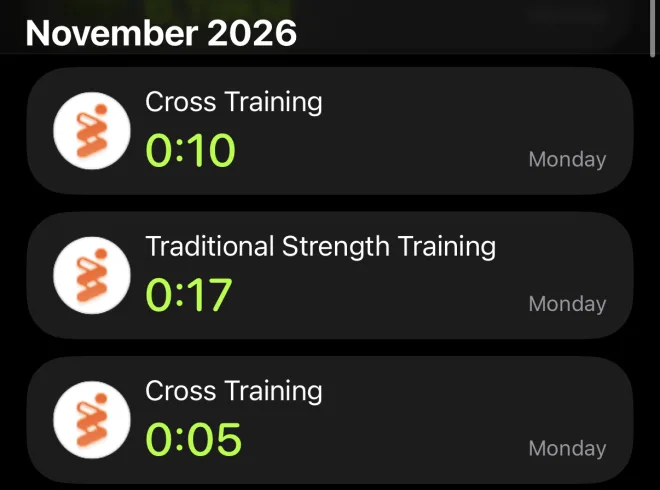
Atlon picks the type from the mode you train in, so you don’t have to:
| Atlon mode | Saved to Apple Health as |
|---|---|
| Just train, AMRAP, RFT, EMOM | Cross Training |
| Strength | Traditional Strength Training |
| Intervals | High Intensity Interval Training |
Limits
- Apple doesn’t document whether, or how, the type changes the calorie estimate, so we can’t tell you which type gives “more accurate” calories.
- In Atlon you can’t change the type a workout is saved as; it follows the mode.
Related questions
- How accurate are Apple Watch calories for HIIT?
- Can Apple Watch track weightlifting?
- Does Atlon sync with Apple Health and close my rings?
Updated